Organizations that invite ideas from outside their walls face a surprisingly hard problem once participation scales.
When dozens or hundreds of people are submitting ideas – whether for campaigns, features, concepts, or improvements – it quickly becomes difficult to answer basic questions.
- Who submitted first?
- Which ideas overlap?
- Which ones are genuinely original?
Without structure, idea intake turns into noise.
US9501480B2 was designed to address this exact problem. It describes a structured process for receiving creative submissions, assessing originality and timing, selecting the best fit, and rewarding contributors when their ideas are used. That concept is now at the center of a dispute between Virtual Creative Artists, LLC and Hyatt Corporation.
To see how this idea developed, we used the Global Patent Search tool to trace earlier patents that shaped this approach.
How US9501480B2 Actually Handles Creative Submissions
To understand US9501480B2, it helps to forget platforms, servers, and technical diagrams for a moment.
Think instead about what usually goes wrong when people send creative ideas online.
Someone submits an idea. It lands in a queue with hundreds of others. There’s no easy way to tell who sent what first, whether the idea is original, or how valuable it really is. Most of the time, nothing happens next.
This patent changes that flow.
First, it treats every submission as a tracked entry, not a loose suggestion. When an idea is submitted, the system records who sent it, when it arrived, and what it contains. This alone helps prevent disputes about ownership or timing later.
Next, the system checks originality. For example, if two people submit very similar concepts for a hotel loyalty campaign or a TV storyline, the system can flag overlaps instead of letting duplicates slip through unnoticed.
The patent also introduces feedback and ranking. So that ideas are not judged in isolation. They can be reviewed, scored, or reacted to by audiences or internal teams, helping the best ones rise naturally.
Finally, contributors are rewarded when their ideas are selected or used. Instead of ideas disappearing into silence, creators have a reason to participate, knowing there is recognition or compensation tied to real use.
Key Features That Make This System Work
- Structured idea submission: Every idea enters the system in a defined format, not as a random email or message. This makes submissions easier to review, compare, and manage at scale.
- Clear ownership and timing: Each submission is time-stamped and linked to its creator. If two similar ideas appear, the system knows who submitted first, reducing confusion and disputes.
- Originality checks: The system compares new submissions with existing ones to spot overlaps. This helps surface genuinely new ideas instead of rewarding repeats.
- Feedback and ranking: Ideas can receive scores, reactions, or reviews from users or internal teams. Strong concepts rise naturally instead of getting buried.
- Selection and use tracking: When an idea is chosen, the system records how and where it is used. Nothing moves forward without leaving a clear trail.
- Creator rewards: Contributors are recognized or compensated when their ideas are used, giving people a reason to keep participating.
What this patent really does is turn idea submission from a black hole into a process people can trust.
A similar filtering problem appears in US9639608B2, which focuses on recommendation systems that decide when something should surface, not just what exists. Like US9501480B2, it treats relevance as something earned through context, behavior, and evaluation, rather than showing everything at once.
3 Patents That Laid the Groundwork for This System
These systems for handling creative ideas did not evolve overnight. Long before structured submission platforms existed, inventors were already trying to solve problems around ownership, selection, and fair use of user-submitted content.
Using the Global Patent Search tool, we took a stroll down the memory lane to find earlier patents that addressed pieces of this challenge in different ways. Each of them adds context to why US9501480B2 works the way it does today.
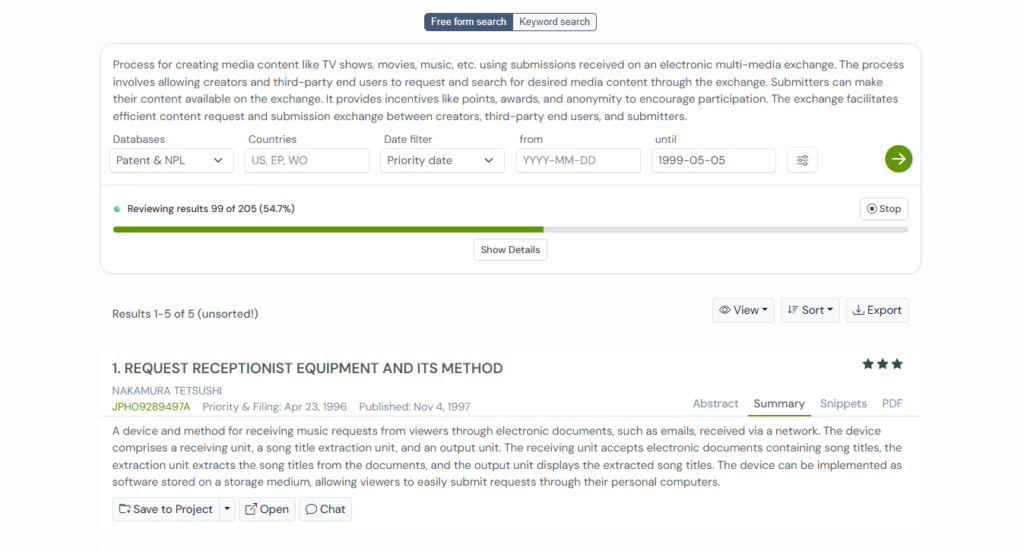
Here’s how those ideas developed.
1. JPH09289497A
Before online submissions existed, audience requests were slow and messy. People sent song requests to radio and TV stations by postcard, letter, or fax. When hundreds of requests arrived, sorting them became a manual headache.
JPH09289497A, filed in 1996, tackled this problem by digitizing the process. Instead of reading requests one by one, the system accepted electronic documents, extracted song titles automatically, and grouped them in a structured list.
From there, the station could select what to play based on clear rules, like the most requested songs, a holiday theme, or the focus of the day’s program.
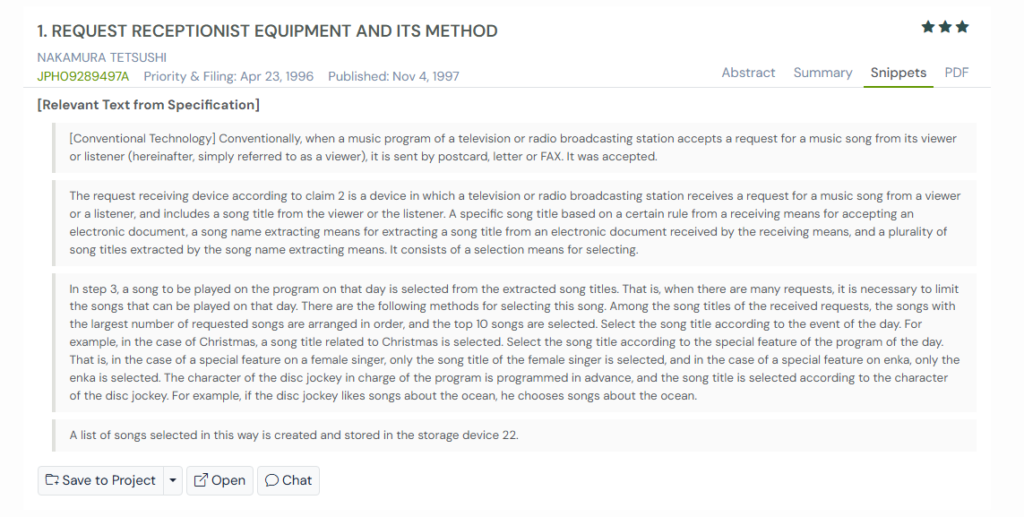
This matters because it introduced an early version of structured submission and selection. Requests were no longer just messages. They became organized inputs that could be filtered, ranked, and chosen systematically.
That same idea shows up later in US9501480B2, where creative submissions are treated as trackable entries instead of unmanageable inbox clutter.
2. JPH11224293A
Before online Q&A platforms and creator marketplaces became common, people still required good information. But there was no reliable way to ask for it, except going to their nearest libraries.
JPH11224293A, filed in 1998, tackled this by turning information requests into open solicitations with rewards attached. Someone could post a question, set a prize, and publish it to the network. Contributors responded anonymously, and only the answers that met the requester’s expectations received a reward.
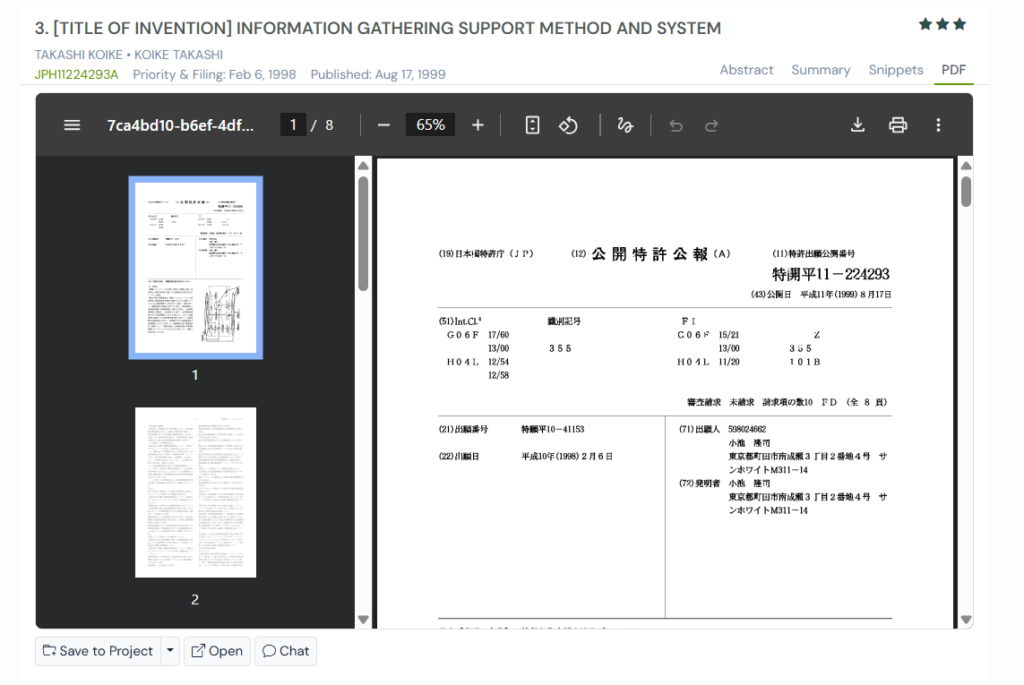
What makes this important is the shift it introduced. Information was no longer shared purely on goodwill. Quality, speed, and usefulness mattered because rewards depended on them.
This idea of linking contribution, evaluation, and compensation clearly feeds into US9501480B2, where creative input is encouraged by recognition and reward instead of disappearing without feedback.
3. US5508731A
Long before online platforms, broadcasters faced a familiar challenge. Viewers watched shows, but participation was passive. Once the program ended, the audience disappeared, and there was little incentive to stay engaged or respond.
US5508731A, filed in 1993 by Response Reward Systems LC, approached this by turning broadcasts into two-way experiences. During a TV or radio program, questions or tasks were sent out to viewers. People responded from their own locations, and those who met the response criteria earned rewards like prizes, discounts, or points.
What made this system powerful was how it linked participation to incentives. Viewers were encouraged to keep watching, answer multiple questions, and build up credits over time.
That same idea carries forward into US9501480B2, where participation is not just allowed but rewarded. Creative input becomes something people actively engage with because effort leads to recognition and compensation.
The same shift toward structure appears in US9792361B1, where spoken ideas are no longer allowed to disappear after a conversation. Instead, voice inputs are captured and stored as searchable records, turning fleeting speech into structured, reusable knowledge.
How These Patents Stack Up Against US9501480B2
Each of these earlier patents solved a very specific problem around submissions, participation, organization, or rewards.
When you place them side by side, you can see how those individual ideas gradually came together into the more complete creative submission system described in US9501480B2.
| Patent | Core Problem It Addresses | What It Introduced | How It Connects to US9501480B2 |
| JPH09289497A | Manual handling of large volumes of audience requests | Digitized requests, automatic extraction, rule-based selection | Introduced structured intake and filtering instead of inbox chaos |
| JPH11224293A | No incentive for people to provide high-quality information | Linked submissions to evaluation and rewards | Brought reward-driven participation into submission systems |
| US5508731A | Passive audiences with low engagement | Two-way participation with incentives and credit accumulation | Showed how rewards increase sustained creative engagement |
Seen together, these patents explain why US9501480B2 focuses so heavily on structure, evaluation, and incentives. It is not a single leap, but the point where many earlier ideas finally align into one system.
How Global Patent Search Helps Reveal This Evolution
When you read patents like these are read one by one, they can feel disconnected. Each solves a narrow problem in isolation. One handles submissions. Another handles rewards. The bigger picture only appears when you connect them.
This is where the Global Patent Search tool becomes useful.
How we used GPS for this analysis:
- Start with US9501480B2 to identify patents related to creative submissions, rewards, and more.
- Use relevance sorting feature to surface patents that share similar behavioral ideas, not just overlapping keywords.
- Read summaries first to understand the problem each patent was trying to solve before diving deeper.
- Read the patent in detail within the tool and learn how the ideas around participation, evaluation, and structure gradually evolved.
Instead of getting lost in technical language, GPS helps you see how real-world problems shaped invention over time. If you want to understand where modern creative platforms came from, this kind of connected view makes all the difference. Try the tool today!
Frequently Asked Questions
1. Why do creative ideas often get ignored on online platforms?
Most platforms collect ideas without a clear system to review, rank, or respond to them. Submissions pile up, teams lack time to evaluate everything, and creators receive no feedback. Without structure or incentives, even good ideas get lost, which discourages future participation and lowers overall quality.
2. How do platforms encourage users to share high-quality ideas?
Platforms that work well usually combine clear submission rules, visible evaluation criteria, and some form of reward or recognition. When contributors know their input will be reviewed fairly and might lead to credit, or exposure, they are more likely to submit thoughtful, original ideas.
3. What makes a creative submission system effective at scale?
An effective system treats ideas as structured entries, not messages. It tracks who submitted what and when, checks for duplication, allows ranking or feedback, and records how ideas are used. This structure helps teams manage large volumes without overwhelming reviewers or ignoring contributors.
4. Why are rewards important in participatory media platforms?
Rewards create accountability and motivation. When participation leads to points, prizes, or recognition, users stay engaged longer and put more effort into their contributions. Rewards also help filter quality, since contributors know that usefulness, speed, or originality directly affects outcomes.
Disclaimer: The information provided in this article is for informational purposes only and should not be considered legal advice. The related patent references mentioned are preliminary results from the Global Patent Search tool and do not guarantee legal significance. For a comprehensive related patent analysis, we recommend conducting a detailed search using GPS or consulting a patent attorney.