Anyone who has tried to stream music on a smart speaker while their TV, laptop, and phone all fight for Wi-Fi space knows how chaotic home networks can feel. In the middle of that chaos, there’s a simple question most devices struggle to answer. Which of us actually belongs to this home network?
As more gadgets connect and digital content becomes tightly protected, being able to reliably recognize trusted devices matters more than ever.
That’s where US8037161B2 comes in. Instead of relying on rigid network rules or fragile registration lists, the patent introduces a smarter approach: devices compare the history of who they’ve seen on the network to judge whether another device is truly part of the same home environment.
This invention has also surfaced in litigation, highlighting its real-world significance. Using Global Patent Search tool, we explored how this idea fits into broader home-network security innovations.
Getting to the Heart of What US8037161B2 Really Solves
At its core, this invention tackles a practical question: how can one device confirm that another truly belongs to the same home network without relying on rigid rules or central verification systems? Devices move, networks shift, and connections don’t always follow predictable patterns. And trust still needs to be established.
US8037161B2 solves this by giving each device a lightweight way to remember its environment. Every device keeps a small record of the other devices it has seen on the network over time. Later, when it needs to check if another device is trustworthy, it compares these memories.
If the histories match, the devices can confidently treat each other as part of the same home setup. This simple idea creates a smoother, more flexible way for home networks to recognize their own devices without making the user jump through complicated authentication steps.
Key Features of US8037161B2
Here are the core ideas that make this invention work in a simple and reliable way:
- Each device keeps track of the other devices that appear on the network while it is connected, building a natural understanding of its surroundings.
- Instead of random snapshots, the device records a chronological list of who joined the network and when, creating a dependable history.
- When one device wants to confirm another device’s belonging, it simply requests the stored timeline that the other device has collected.
- Both devices check whether their timelines overlap. If they share the same familiar devices, it becomes easy to tell that they come from the same home network.
- Because this comparison relies on repeated and consistent network activity, it becomes difficult for an unknown or fake device to pretend it belongs.
Together, these features create a system that feels far more natural than traditional network checks.
For a deeper look at how smart homes manage communication between appliances, our analysis of US8488624B2 highlights early innovations that shaped device interactions inside home networks.
How Earlier Ideas Help Us Understand This Invention Better
Now that we have a clear picture of what US8037161B2 brings to home network security, it becomes helpful to look at the ideas that came before it. Many earlier inventions tried to solve similar challenges, but each one approached the problem in its own way.
Some focused on setting strict network boundaries, others relied on central servers, and a few explored limited ways for devices to recognize one another.
Using GPS, we studied a set of related patents that shaped this space over time. Looking at these earlier ideas makes it easier to see how the field evolved and where this invention fits in the bigger picture.
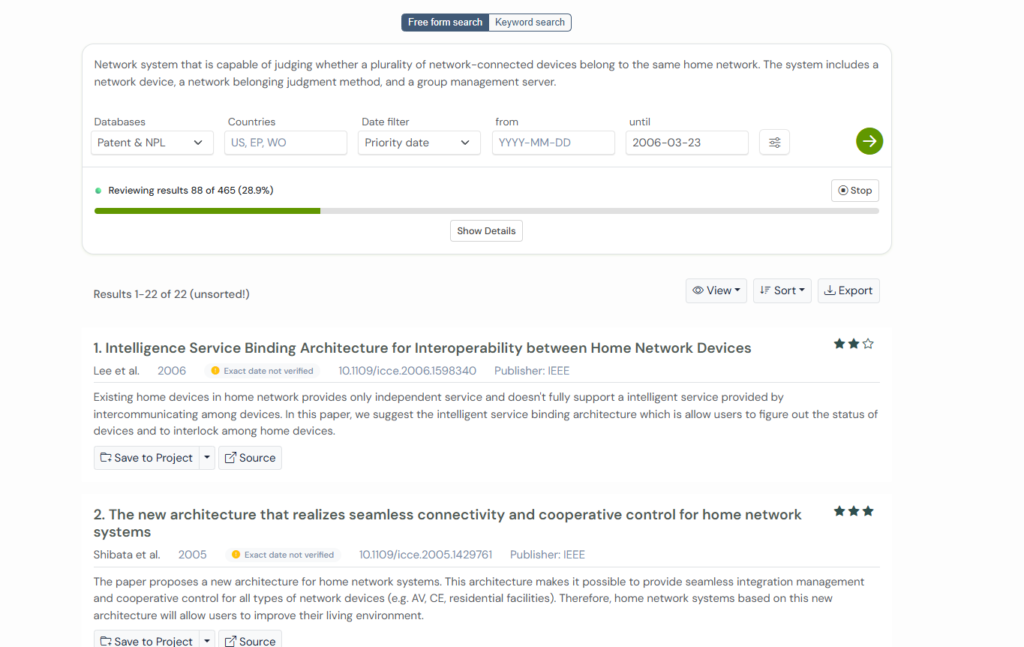
Let’s explore some of them.
1. CA2419512A1
Anyone who has managed a growing home or office network knows how quickly things get confusing. Devices sit across different rooms, different routers, and sometimes even different subnets. When you try to locate a printer or a shared device, the network often feels like a maze with no clear map.
Xerox’s CA2419512A1, published in 2003, steps in to solve this problem by giving devices a structured way to discover each other.
The invention uses a group name that several devices can share. A discovery device starts by keeping a basic list of known subnets. It then asks a name server for all IP addresses tied to that group.
Once it receives these addresses, it contacts each device to learn which subnet it belongs to. With that information, the discovering device can begin mapping the entire network and use additional discovery methods to locate more devices.

In simple terms, the patent teaches devices how to create a clearer map of who is where on the network.
This idea overlaps with US8037161B2 because both inventions focus on improving how devices understand their surroundings before making decisions. The Xerox patent builds this awareness through group names and IP-based queries across subnets.
Whereas US8037161B2 builds it through shared histories of device presence on the network. Both approaches aim to strengthen trust by improving visibility, even though they rely on very different mechanisms.
Why this patent is important
The invention helped establish early techniques for locating devices across complex network layouts. By teaching devices how to discover subnets and organize known endpoints, it paved the way for more flexible and intelligent network management systems.
These ideas contribute to the broader evolution of how devices recognize and verify each other in modern home and office networks.
Many home networks still rely on hybrid communication technologies. Our guide on infrared remote control systems shows how legacy protocols continue to shape modern appliance behavior.
2. JP3353009B1
Anyone who has set up smart appliances at home knows how messy things can get the moment new devices join the network. A refrigerator connects through power lines, a television uses infrared, a phone connects through radio, and suddenly the system has no clear idea of who these newcomers are.
For a home network to work smoothly, every device needs a distinct identity that the system can recognize and manage.
This Japanese patent, filed and published in 2002, introduces a framework for assigning identification signals to each device as it enters the home network. The invention treats the home as a collection of subnetworks and requires a new device to request an identification signal from the network. The network then responds with a structured ID, typically made of two parts: a subnetwork identifier and a device identifier within that subnetwork.
A parent router may coordinate this entire process so that IDs are assigned without duplication. Once a device receives its identification signal, it stores it and begins acting as an authenticated member of the home setup.
This idea overlaps with US8037161B2 because both inventions focus on recognizing which devices truly belong in the home environment. The Japanese patent relies on formal identity assignment, while US8037161B2 relies on shared device memories. Both approaches aim to eliminate confusion and strengthen trust within a dynamic home network.
Why this patent is important
The invention helped shape early approaches to identity management inside home networks. By ensuring devices receive unique, conflict-free identification signals, it made multi-device environments easier to manage and reduced the chances of misidentification or unauthorized access.
That reliance on real behavior instead of fixed assumptions mirrors this US8407411B2 patent audit, where memory frequency decisions are driven by actual DRAM activity rather than preset clocks.
3. JP2001028592A
When different devices connect through power lines, the home network needs a reliable way to recognize each one without mixing them up.

JP2001028592A, filed in 1999 by Matsushita Electric, introduced a structured method for assigning identification codes to devices. It used a two-step identity system where each device receives a subnetwork ID first and then a device ID within that subnetwork.
A parent router oversees the process to prevent duplicates and ensure smooth onboarding. Even devices installed before a home network exists can automatically receive identification codes once the network is set up.
The patent overlaps with US8037161B2 because both focus on understanding which devices truly belong in the home environment.
For readers interested in how Wi-Fi access technologies evolved to support stable multi-device environments, our analysis of US7734283B2 offers useful background.
Why this patent is important
It helped create early standards for managing identities in home networks, reducing conflicts and making it easier for new appliances to join without confusion. The structured approach also ensured that large networks with many similar devices stayed organized and secure over time.
4. CN1466064A
CN1466064A focuses on how devices can discover each other automatically inside a changing home network. Filed in 2002 by Lenovo, this invention introduces a method where devices broadcast their presence through multicast messages across backbone networks and control subnets.
Other devices listen for these announcements, gather the information, and register with a resource manager so the network can quickly identify available equipment and services without manual setup.
The system supports both wired and wireless devices, allowing them to form a functional network simply by responding to discovery messages. This creates a dynamic environment where devices can join, leave, or move around while the network keeps everything organized.
This idea overlaps with US8037161B2 because both patents focus on how devices understand their position within the home network.
Why this patent is important
It helped shape early methods for automatic device discovery in smart home environments, reducing the need for manual configuration and making resource sharing more seamless.
5. KR20050006422A
KR20050006422A looks at a simple but very real problem inside home networks: when multiple appliances join the system, how do you organize them so they can be controlled easily?
Filed in 2003 by LG Electronics, this invention introduces a method for grouping home appliances based on where they are installed and assigning address information accordingly. Instead of treating every device as an isolated node, the network organizes appliances by room or location, making control far more intuitive.
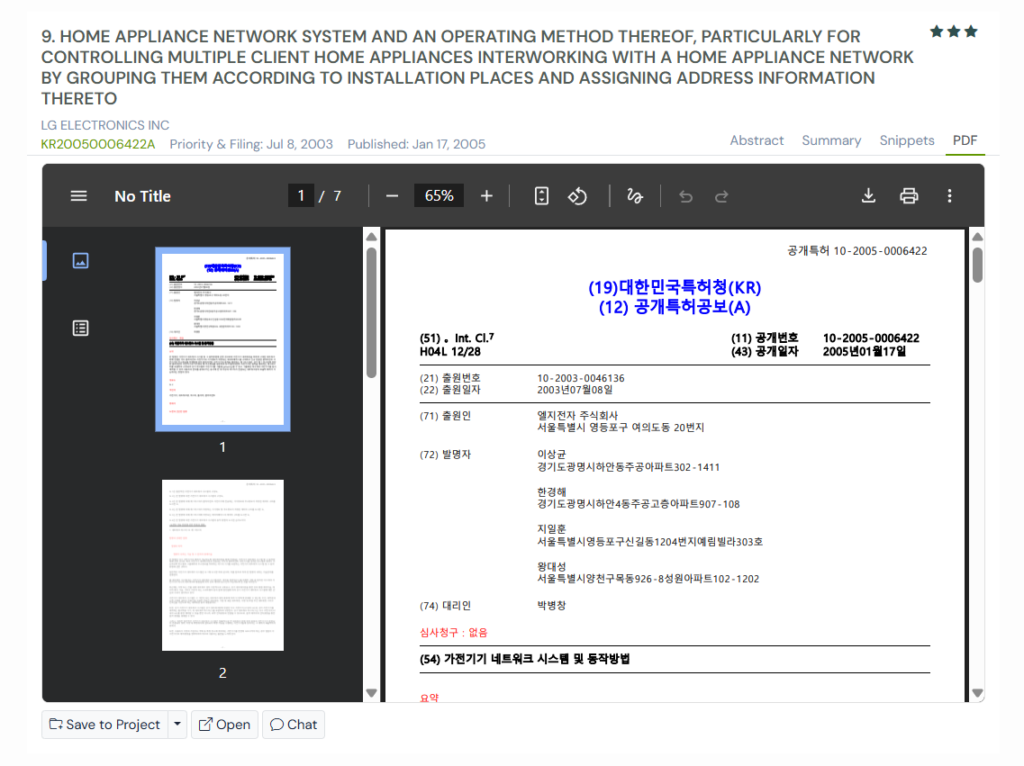
The system assigns address information as soon as a new client appliance connects. Once grouped, the master device can send commands to an entire room or zone rather than each appliance individually. This improves user convenience and reduces the complexity of managing large home setups with multiple connected devices.
KR20050006422A overlaps with US8037161B2 because both patents focus on understanding the relationship between devices in a home network. LG’s invention organizes devices by physical space, while US8037161B2 evaluates whether devices truly belong to the same network through shared connection history.
Why this patent is important
It introduced one of the early approaches to location-based grouping in smart homes, making device control simpler and more efficient. This concept later became fundamental in modern home automation systems that let users manage entire rooms with a single command.
Wireless communication is at the heart of how devices sense each other on the network. Our review of US6813742B2 explores wireless signal processing techniques that support these interactions.
How These Earlier Inventions Stack Up Side by Side
Now that we have walked through each related patent individually, it helps to place them side by side. A comparison makes it easier to see how each invention approaches a similar problem from a different angle. It also highlights how these earlier ideas collectively shaped the direction that led to the subject patent, US8037161B2.
The table below brings together their core innovations, how they connect to the central idea, and the broader impact of each invention.
| Patent Number | Assignee | Core Innovation | How It Connects to US8037161B2 | Impact on Home Networking |
| CA2419512A1 – System and Method for Locating Devices on a LAN | Xerox Corp | Identifies devices by querying a name server and mapping subnets for accurate discovery. | Both patents rely on understanding device presence across network layers, though Xerox focuses on subnet mapping instead of historical comparison. | Improved accuracy of device discovery in multi-subnet environments. |
| JP3353009B1 – Routing Method in a Home Network | Hitachi | Introduces a structured way to assign identification signals to devices and subnetworks. | Shares the goal of confirming legitimate devices, but uses formal ID assignment instead of stored device histories. | Created early rules for preventing duplicate device identities. |
| JP2001028592A – Identification Code Assigning System | Matsushita Electric | Uses a two stage ID structure managed by routers to ensure unique device identities. | Similar intent of validating device belonging, though focused on hierarchical identity assignment. | Enhanced reliability of onboarding new appliances into home networks. |
| CN1466064A – Dynamic Device Discovery in Home Networks | Lenovo | Uses multicast announcements for real time discovery of devices and their capabilities. | Connects through the shared theme of determining which devices exist on the network, while US8037161B2 adds trust evaluation. | Enabled flexible device discovery without manual configuration. |
| KR20050006422A – Home Appliance Grouping and Address Assignment | LG Electronics | Groups devices by installation location and assigns address information for easier control. | Aligns through organizing devices based on relationships, while US8037161B2 organizes devices based on shared network history. | Simplified management of large home networks through room-based grouping. |
How GPS Helps You See the Full Landscape of Home Networking Patents
Studying a patent like US8037161B2 gives you a clear view of one solution, but it is only a small part of a much wider network evolution. Ideas in home networking often grow in layers. One patent focuses on organizing devices, another on assigning identities, and another on how devices discover each other. Together, they tell the complete story.
The Global Patent Search tool makes it easy to connect those dots. It shows how earlier inventions set the foundation, and how different approaches tried to solve similar challenges inside a home network.
Here’s how you can use GPS to explore these relationships smoothly:
- Start with any patent number: Enter something like US8037161B2 or even a short phrase describing the invention. GPS uses this as your starting point.
- Check the related results: The tool highlights other patents dealing with device discovery, identity assignment, grouping, or network belonging.
- Open the snippets: Each related patent includes short extracts from the claims or description, making it easy to spot conceptual overlaps in seconds.
- Dive deeper only when needed: If a patent seems relevant, you can open the full text to compare how it structures device communication, identity handling, or network logic.
- Filter by specific themes: Whether you want to focus on identification codes, dynamic discovery, subnetwork management, or device grouping, GPS lets you sort by relevance and narrow your view.
- Build a clearer understanding: By seeing how these ideas intersect, you get a complete picture of where US8037161B2 fits in the evolution of smarter, more reliable home networks.
The GPS tool takes a complex research process and turns it into a clear, guided journey. It helps you understand not just the patent in front of you but the entire ecosystem of innovations that led to it. Try the tool today to see the results for yourself!
Frequently Asked Questions
1. What is a home network and how do devices connect to it?
A home network is a system that links your phones, laptops, smart TVs, appliances, and IoT devices so they can communicate with each other. Devices usually connect through Wi-Fi, Ethernet cables, or short-range wireless technologies like Bluetooth or infrared.
2. Why do devices need identification codes or addresses?
Each device needs a unique identity so the network knows who is sending or receiving information. Without a proper ID, commands can get mixed up, devices may conflict, and the network becomes unreliable.
3. What does device discovery mean in a home network?
Device discovery is the process where new or existing devices announce themselves on the network. Other devices listen to these announcements so they can understand who is present and what services are available.