Creams and lotions often promise relief. They cool the skin, calm irritation, and fade pain for a while. But once the surface feels better, the deeper problem usually stays right where it is.
Scientists involved in research and development have been chasing a way to change that. That is, a treatment that doesn’t just soothe but actually heals.
One breakthrough came with US10653736B2, a patent exploring how cannabinoids such as THC and CBD could help the skin recover faster. It introduced a concentrated topical formulation designed to restore balance and reduce inflammation.
This patent marked a quiet turning point for cannabis. From recreation to recovery. From a plant once stigmatized to a source of real therapeutic potential.
To see how this invention fits into the bigger picture of cannabinoid-based therapies, we turned to the Global Patent Search (GPS) tool. It uncovered a network of related ideas, patents that together show how science is reshaping what “healing through the skin” really means.
The Core Idea Behind US10653736B2
Most skincare products focus on calming visible factors like redness, dryness, or irritation. But beneath those visible signs, inflammation often lingers, hidden deep within the layers of skin. The patent tackles that hidden problem head-on.
It uses compounds from the cannabis plant, mainly THC and CBD, to reach where ordinary creams cannot. These cannabinoids are known for their healing and anti-inflammatory powers, but here, they’re used in higher, clinically meaningful concentrations.
The idea is simple yet powerful, delivering real relief right where the skin needs it most.
By letting cannabinoids interact directly with the skin’s natural receptors, the formulation helps restore balance, reduce inflammation, and speed up recovery. It turns the skin into its own healing system, guided by carefully tuned natural chemistry.
Key Features of the US Patent No.10653736B2
At its core, the patent stands on a few key ideas that give it its strength:
- Active cannabinoid concentration: The formula uses measurable levels of THC and CBD that go beyond cosmetic limits to achieve therapeutic effects.
- Localized impact: The treatment is applied directly to the affected area, letting the skin absorb what it needs without entering the bloodstream.
- Controlled formulation: The balance between THC and CBD is carefully designed to deliver relief without psychoactive effects.
- Multi-condition use: It can be adapted to treat various inflammatory and infectious skin conditions.
Its strength lies in combining established ingredients like THC and CBD in a new concentration and formulation that delivers real therapeutic results.
Together, these elements form a new kind of skin therapy that blends plant science with precision care. It sets the foundation for how topical treatments can turn into lasting therapeutic solutions.
Exploring the Web of Connected Innovations
Every breakthrough stands on the shoulders of earlier ideas. To understand how this cannabis-based formulation evolved, we looked at patents that tackled similar challenges in skin therapy and pharmaceutical design.
Let’s have a look at some of them:
1. ES2253331T3 – Structures and Methods to Administer Cannabis to Patients
Published in 2006, the patent moved cannabis use from smoke to science. It imagined a patch that could deliver cannabis through the skin, slowly and steadily. No joints, no drops, just a clean, measured dose.
The patch mixed cannabinoids with ethanol and propylene glycol to help them move through the skin. It even used helpers like urea and DMSO to make the skin more welcoming.
The idea was clever. To make cannabis work like any other medicine and give patients control over dosage and timing. It was steady, safe, and consistent, something the medical world had been waiting for.
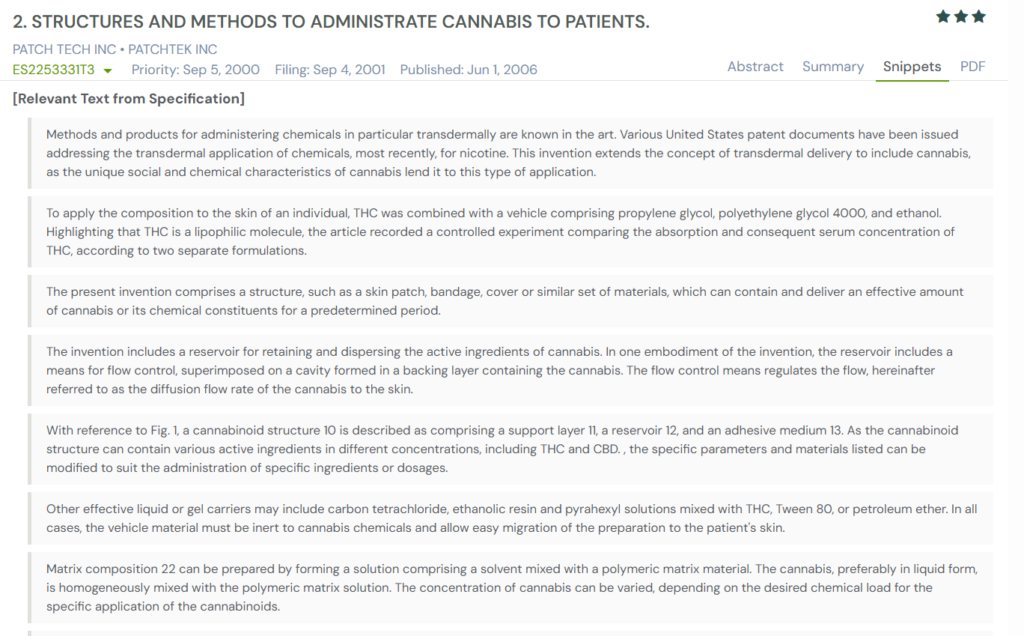
But it stopped at delivery. It didn’t explore how stronger or more concentrated formulas could help with real skin conditions.
That is the gap US10653736B2 later filled by creating a formulation that did more than deliver. It healed.
What Made it Important
The invention proved that cannabis could move beyond stigma and into serious medical use. It set the stage for treatments that were not only effective but also approachable.
More importantly, it made the idea of wearing relief a reality. What started as an experiment in skin absorption became the foundation for modern topical therapies that bring comfort and calm straight to the skin.
A similar challenge is addressed in US12304813B2, where the inventors tackled the instability of sodium thiosulfate by redesigning both the purification and testing steps.
2. US2012027701A1 – Canna and Shea Topical Cream
US2012027701A1, published in 2012, turned two familiar ingredients into a small revolution for everyday care. It mixed shea butter and cannabis to create a cream that could soothe sore muscles, ease joint pain, and calm tired skin.
The idea was simple: relief that you could apply straight to where it hurts.
The formula worked quietly but effectively. It was gentle enough for daily use yet strong enough to help with dryness, sunburn, and inflammation. For many, it offered the comfort of natural care without pills or prescriptions.
The problem was that it stayed surface-level. It didn’t go deeper into the skin to target conditions or deliver cannabinoids in medical-grade doses.
That is where US10653736B2 stepped in, building on the same foundation to create a treatment with measurable therapeutic power.
What Made It Important
The patent brought cannabis into self-care routines without the stigma. It showed that healing could be simple, natural, and part of daily life.
And while it started as a humble cream, it opened the door for a new class of cannabis-based treatments that cared for the body through the skin.
A closely related innovation appears in US10874703B2, which explores how pressurized oil-infusion improves penetration into plant material, a useful comparison for understanding how cannabis-based formulations achieve consistency and potency
3. US2010166891A1 – Composition Comprising Hemp Oil for Treating Topical Diseases
Published in 2010, US2010166891A1 gave hemp oil a real purpose in medicine. It was created to help cancer patients dealing with hand-foot syndrome, a painful side effect that leaves the skin cracked, sore, and too sensitive to touch.
The inventors at Intendis GmbH wanted something better than the heavy ointments that smelled bad and lost their effect within weeks.

They designed a cream that blended hemp oil with mango butter, beeswax, and aloe vera. The result was a gentle, nourishing formula that helped skin heal faster and stay soft for longer.
What made it special was how practical it felt. It did not just treat symptoms. It gave patients comfort and a sense of normalcy during a difficult recovery.
Still, it had limits. It did not focus on the cannabinoid precision or deeper therapeutic effects that US10653736B2 would later bring. That is where the next big step happened, transforming hemp-based care into targeted, consistent healing.
Explore how cutting-edge research is transforming cancer therapy in our patent analysis on advanced cancer treatment innovations.
What Made It Important
The patent proved that hemp oil could move beyond beauty shelves and into real treatment. It showed that natural ingredients could bring relief to people in pain. And in doing so, it set the foundation for the advanced cannabinoid formulations that followed.
4. US5061700A – Glyceryl Acetate Ointment
Published in 1991, the patent focused on something we all take for granted i.e. the creams and ointments that sit quietly in our medicine cabinets. It explored what makes a topical base truly effective, not just soothing.
The inventor, Gordon Dow and Debra Dow, developed a new kind of ointment vehicle made from glyceryl acetate and oily materials. It was built to carry medicines like corticosteroids and antibiotics deeper into the skin while keeping the texture smooth and washable.
The formula balanced two tricky goals: releasing drugs evenly and allowing them to stay long enough on the skin to work.
This design gave doctors and pharmacists a base they could adapt for nearly any skin condition, such as eczema, dermatitis, or psoriasis. It made treatments more efficient, comfortable, and easy to apply.
What set it apart from older ointments was its balance between comfort and performance. Earlier formulations felt greasy or blocked pores. This one aimed to hydrate without suffocating the skin, keeping it breathable while improving drug absorption.
When compared with US10653736B2, the difference becomes clear. This patent built the foundation for modern topical ointments, while the subject patent took it further by combining those delivery principles with cannabinoid science to achieve targeted therapeutic effects.
What Made It Important
US5061700A redefined how medicines meet the skin. It showed that the base matters as much as the drug itself.
By creating a vehicle that enhanced absorption without discomfort, it acts as a competitor for advanced dermatological treatments, including today’s cannabinoid-rich formulations.
5. WO2010150245A1 – Cannabis Flower and Seed Extracts
Published in 2010, the patent showed how science and nature can work together to heal.The team at Tikun Olam Ltd. focused on one of the most common skin problems i.e. inflammation.
Whether it appeared as psoriasis, eczema, or arthritis, treating it often meant using harsh chemicals that brought new side effects.
Their answer came from the cannabis plant. By blending extracts from both the flower and the seed, they created a formula that did more than calm irritation. The two worked together to soothe inflamed tissue and restore the skin’s balance naturally.
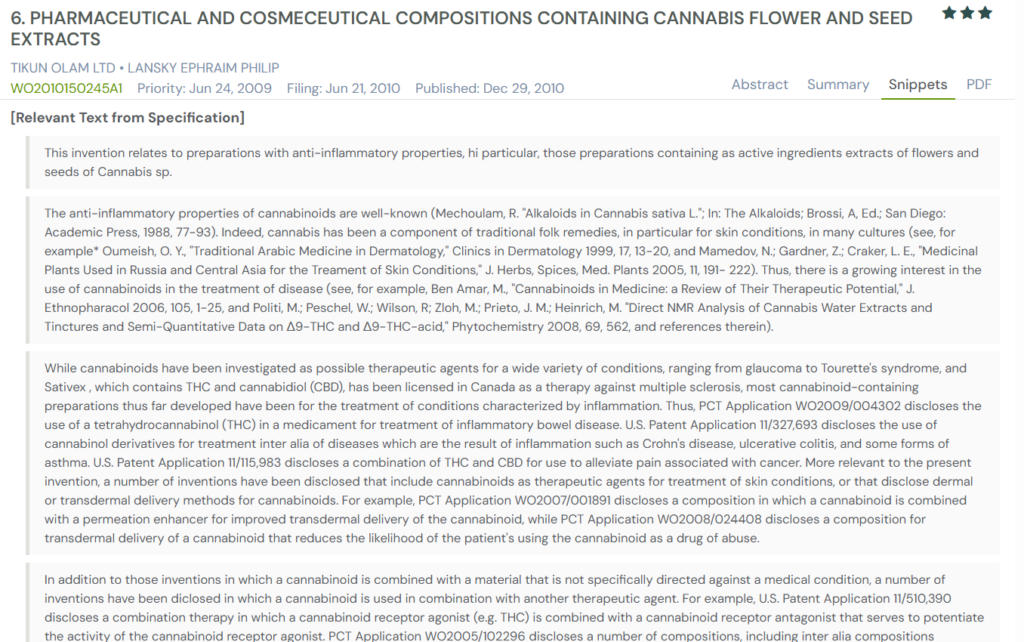
What made it unique was its range. It could be used as a cream for surface issues or as a deeper ointment for pain and swelling. Patients who tried it reported faster relief and longer comfort than with standard anti-inflammatory products.
This was where the link to US10653736B2 became clear. While this patent explored the healing power of cannabis through combined extracts, the subject patent took it further with more controlled concentrations and consistent delivery.
What Made It Significant
The patent marked the turning point for cannabis in skincare. It proved that natural medicine could be reliable, measurable, and effective. And that insight helped shape the next generation of cannabinoid-based topical treatments.
Comparison Summary: How Each Patent Compares with US10653736B2
| Patent | Filed | Core Idea | Application Type | Key Mechanism | Technical Overlap with US10653736B2 | Key Difference |
| US10653736B2 | 2019 | High-concentration cannabis-based topical drug for dermatological use | Creams and ointments | Uses THC/CBD above 2 mg/kg for stronger therapeutic effect | ||
| ES2253331T3 | 2001 | Transdermal patch for controlled cannabis delivery | Skin patch or bandage | Flow-regulated reservoir releasing THC and CBD | Shares the goal of topical cannabinoid delivery | Lacked precise concentration control and formulation flexibility |
| WO2010150245A1 | 2009 | Anti-inflammatory composition using cannabis flower and seed extracts | Topical ointment and cream | Synergistic blend of flower and seed extracts | Both address inflammation through topical cannabis formulations | Used natural synergy, not concentration-based enhancement |
| US2010166891A1 | 2008 | Hemp-oil-based cream for treating hand-foot syndrome and other skin diseases | Cream and ointment | Combines hemp oil with natural moisturizers and anti-inflammatories | Focus on topical relief and skin repair | Low stability and short shelf life limited its effectiveness |
| US5061700A | 1989 | Glyceryl acetate-based ointment vehicle for drug delivery | Topical ointment base | Enhances penetration and hydration for better drug absorption | Shared focus on improving skin drug delivery | Used as a base for multiple drugs, not specific to cannabinoids |
| US2012027701A1 | 2010 | Shea butter and cannabis cream for pain relief | Topical cream | Combines cannabis with shea butter for moisturizing pain relief | Both use cannabinoids for surface-level pain and inflammation | Focused on cosmetic and pain applications, not medical-grade formulation |
Discovering Connections with the GPS Tool
Every patent sits within a larger story of innovation. The Global Patent Search (GPS) tool helps uncover that story.
It builds a broader patent landscape of related inventions, showing how one idea evolves across time and industries.

Here’s how the tool works:
- Begin with your core invention: Enter the patent number, such as US10653736B2, or describe it in simple words, for instance, a topical formulation using cannabis extracts for skin treatment. GPS uses that as a starting point to find related inventions that explore similar concepts.
- Review the highlights: The tool displays concise summaries from claims and descriptions that match your topic. These snippets quickly show what each patent contributes, maybe a new method of extraction, or a different delivery system.
- Dive deeper where needed: When a result looks relevant, open the document to study it further. You can compare how each formulation is built, how ingredients are stabilized, or how dosage is optimized for effectiveness.
- Look beyond one field: GPS helps you trace patterns across different applications from dermatology and pharmaceuticals to natural product chemistry. You can see how the same principle is refined and reapplied in new directions.
Unlike basic search tools, GPS does not stop at keywords. It maps connections that reveal how ideas influence one another.
For US10653736B2, it highlighted how topical cannabis treatments grew from early herbal formulations into data-backed, pharmaceutical-grade therapies that define modern skin science.
Try the GPS tool today to explore these connections for yourself.
Frequently Asked Questions
1. How does a cannabis-based topical cream actually work on the skin?
Cannabis-based topicals interact with the body’s own endocannabinoid system, which helps regulate pain, inflammation, and overall skin balance. When applied directly to the skin, the cannabinoids like THC and CBD bind to local receptors in the epidermis and dermis. This localized action helps reduce inflammation, soothe irritation, and promote healing without entering the bloodstream.
2. What makes this formulation different from regular hemp or CBD creams?
Most CBD or hemp-based creams available on the market use minimal concentrations of cannabinoids. They are often designed for general wellness rather than medical-grade performance. This patented formulation, however, is built with a higher concentration of active cannabinoids that exceeds 2 milligrams per kilogram. That means it is strong enough to deliver real pharmacological benefits.
3. Can cannabis topicals cause psychoactive effects?
No, they do not. Although the formula contains tetrahydrocannabinol (THC), which is the compound responsible for cannabis’s psychoactive properties, it acts only on the surface of the skin. Since the cannabinoids do not enter the bloodstream in significant amounts, they cannot reach the brain to cause any psychological effects.
4. Why are cannabinoids being used in dermatology?
The skin has its own network of cannabinoid receptors that influence how it responds to stress, injury, and inflammation. Cannabinoids naturally help reduce inflammation, regulate oil production, and promote skin repair. That is why they are now being explored for conditions like eczema, psoriasis, atopic dermatitis, and chronic itching. Patients using cannabinoid creams have often reported faster relief from irritation and better hydration, making this an emerging area of dermatological research.